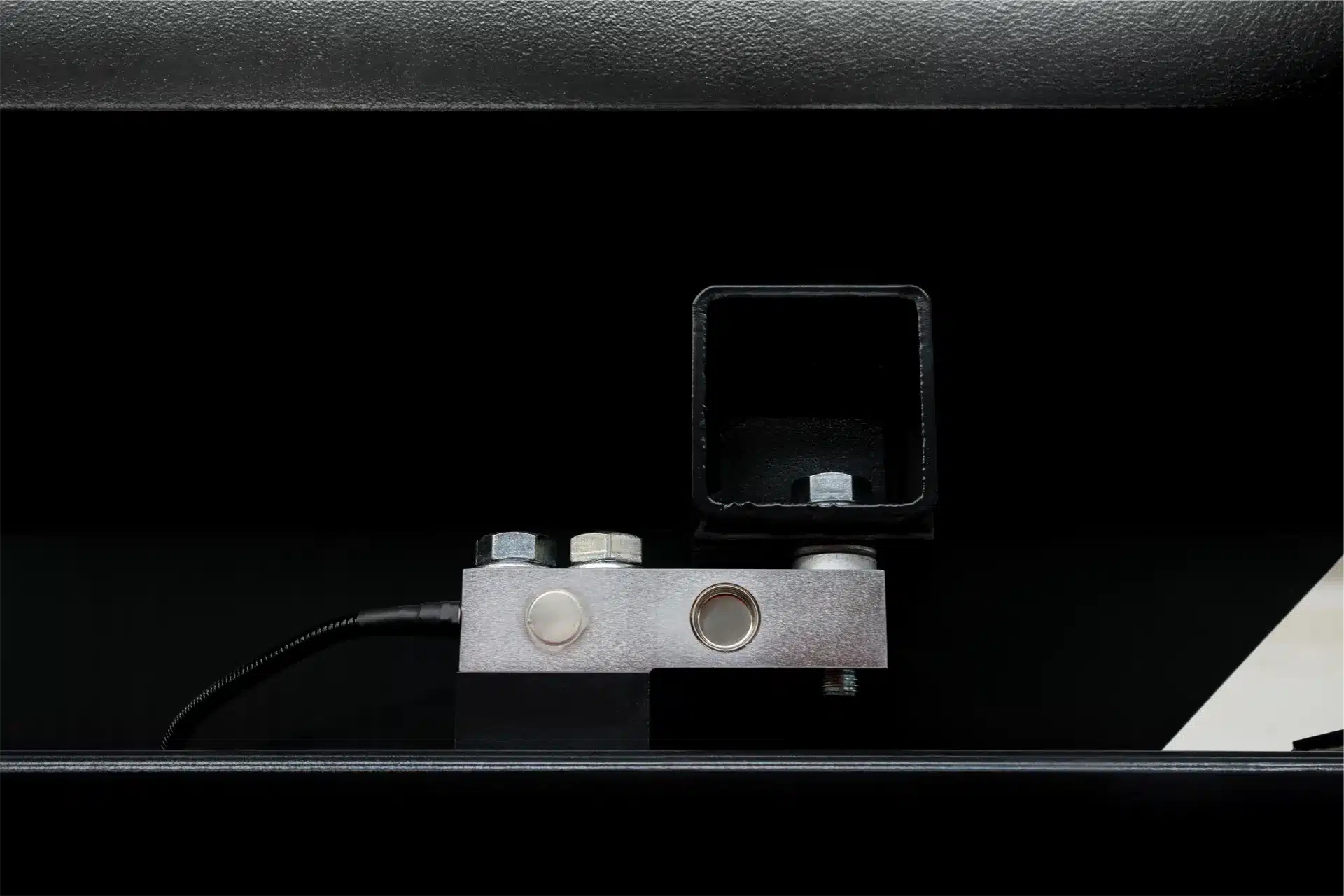
The G Series weighs every material in real time, instead of estimating it by eye or by volume. The result: zero waste, a lower production cost and a plant that never stops.
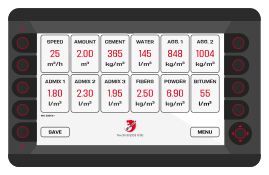
Powder additivesCement, filler and special binders
Bituminous emulsionFor asphalt and cold mixes
Reinforcing fibersFor special fiber-reinforced mixes
Numbers
Return on investment in numbers.
0%
Waste reductionLess waste, more sellable product.
0x
ProductivityUp to double compared to batch.
0–0
MonthsAverage investment break-even.
Want to see a real-world example?
Real-world example
Return on investment, in brief
A typical real-world example: a job site with mixed production, 500 m³ per month, at €150/m³. Here’s what changes with a Kimera plant.
-30%Material waste, thanks to real-time gravimetric dosing.
2xHourly production, with no dead time between cycles.
18-24 monthsFor the full return on investment, even less on the most intensive job sites.
The result?Less waste, more production, and an investment that pays for itself.
Technology comparison
Innovation vs. obsolescence.
Not all plants measure materials in the same way. The difference between gravimetric and volumetric dosing is not a marginal technical detail: it directly affects precision, waste and quality consistency, batch after batch.
Kimera system
Gravimetric dosing
Every component is weighed with load cells and corrected in real time during mixing, regardless of moisture and density.
✓Real-time weighing
✓Correction in <100ms
✓Independent of moisture
✓Automatic log per cycle
✓Certifiable to EN 206
✓PDF/CSV export
98%Precision
<2%Variability
-30%Waste vs. volumetric
Traditional system
Volumetric dosing
Materials are measured based on the space they occupy, without accounting for their actual weight.
✕Measures volume, not weight
✕No automatic correction
✕Sensitive to moisture and particle size
✕No production log
✕Recipe not certifiable
✕Data not traceable
70-80%Precision
±15%Variability
Not measurableWaste reduction
Practical example with 50% aggregate moisture: the gravimetric system automatically corrects the water dosing (175 L) based on the moisture detected by the sensor, with an error of about ±0.5%. The volumetric system does not compensate: the dose varies with the material’s moisture and density, with an error that can reach ±8%. Indicative values, which vary based on the material, the plant and operating conditions.
Tax incentives
Industry 4.0: your plant pays for itself.
Kimera plants, equipped with a PLC and measurement sensors, may qualify as eligible capital goods under the Industry 4.0 Plan: a package of state incentives that reduces the real cost of the investment, including tax credits and subsidized financing.
20%
Tax credit4.0 capital goods
270%
Hyper-depreciationPrevious scheme
Tax incentives
How the Industry 4.0 Plan works
The Industry 4.0 Plan is a set of state measures for the purchase of interconnected, technologically advanced machinery. Kimera plants, equipped with a PLC and measurement sensors, meet the requirements.
20%Up to 20% of the cost for investments up to €2.5 million (10% up to €10 million). Kimera’s PLC, certified load cells and sensors meet the requirements.
270%2017-2020 scheme, now replaced by the tax credit: it allowed up to 270% of the cost to be deducted, turning a €100,000 investment into a €270,000 deduction.
SabatiniSubsidized-rate bank financing for SMEs, with a state contribution increased by 30% for interconnected goods.
G Series or D Series?
Why choose the G Series over the D Series?
Same Kimera build quality, two dosing philosophies designed for different needs: here’s when the G Series really makes the difference compared to the D Series.
VS
G Series · Gravimetric
G Series
40–80 m³/hcontinuous production, no interruptions
When to use it: continuous production, recycling, sustainability.
Share your needs and let's start building the right G Series solution for your project together.
FAQ
Frequently asked questions.
In general, installing Kimera machinery does not require specific permits. Any requirements may vary depending on local regulations and the plant configuration. Our technical team is available to check every aspect and support you with proper integration.
Yes. Kimera machinery is designed to adapt to different operational needs and can be configured according to specific production requirements. Our team supports the customer in defining the solution best suited to their plant.
Yes. Thanks to the programmable recipes integrated into the onboard computer, the same plant can produce different types of product, such as pumpable concrete, fluid mortars, self-leveling or self-compacting formulations. Switching between recipes is simple and allows production to be quickly adapted to different operational needs.
Times vary depending on the configuration chosen and the complexity of the plant. Under standard conditions, installation and commissioning are completed quickly, minimizing the impact on production. Our specialized technicians also handle startup and commissioning of the machine, with detailed planning before delivery.
We offer qualified technical support, after-sales assistance and spare parts availability. Our goal is to ensure operational continuity and maximum reliability over time.
Yes. Kimera machinery is designed with Industry 4.0 in mind and may qualify for the tax incentives provided for investments in technologically advanced capital goods. The benefits depend on current regulations, so we recommend consulting your accountant or our technical team to assess the opportunities available.
Frequentlyasked questions.
Quickly find answers to your production needs
Every project developed, every market reached, every plant delivered is the result of all-Italian engineering, built on quality, reliability and the ability to anticipate the needs of a constantly evolving industry.
Are special permits required to use Kimera machinery?
In general, installing Kimera machinery does not require specific permits. Any requirements may vary depending on local regulations and plant configuration. Our technical team is available to check every aspect and support you in the correct integration.
Can Kimera machinery be configured in different solutions?
Yes. Kimera machinery is designed to adapt to different operating needs and can be configured according to specific production requirements. Our team supports the customer in defining the solution best suited to their plant.
Can different types of material be produced with the same plant?
Yes. Thanks to the programmable recipes built into the onboard computer, the same plant can produce different types of product, such as pumpable concrete, fluid mortars, self-leveling or self-compacting formulations, etc. Switching between one recipe and another is simple and allows production to be quickly adapted to different operating needs.
How long does installation take?
Times vary depending on the configuration chosen and the complexity of the plant. Under standard conditions, installation and commissioning are completed quickly, minimizing the impact on production. Our specialized technicians also handle start-up and commissioning of the machine, ensuring a correct and efficient operational start. We always provide detailed planning before delivery.
What kind of support do you offer after installation?
We offer qualified technical support, after-sales assistance and spare parts availability. Our goal is to guarantee operational continuity and maximum reliability over time.
Is it possible to benefit from tax breaks when purchasing Kimera machinery?
Yes. Kimera machinery is designed with Industry 4.0 in mind and may qualify for the tax incentives provided for investments in technologically advanced capital goods. The benefits depend on current regulations and the type of investment, so we recommend consulting your accountant or our technical team to assess the opportunities available.
Connettiamoci!
Condividi le tue esigenze e iniziamo a costruire insieme la soluzione giusta per il tuo progetto.

 Miscelatori gravimetrici
 Miscelatori ad alta capacità
 Impianti di betonaggio mobili
 Sistemi di trasporto inerti
 Casseforme



 Concrete
 Mortar
 Screed
 Cold asphalt
 Fiber-reinforced concrete
 Recycled
 Fast-setting
 Stabilized soil
 Colored
 Kimera system



